Maximize efficiency, reduce waste, and scale your production with the right kitchen infrastructure.
In commercial food production, meal planning plays a critical role in determining profitability, operational efficiency, and product consistency. A well-structured menu helps control ingredient cost, streamline workflows, and ensure that dishes can be produced at scale without compromising quality.
For operators working with delivery brands, catering services, or large-scale food concepts, planning a menu also requires the right infrastructure. Kitchen layout, equipment availability, and production capacity can influence how efficiently dishes are prepared and how easily a business can grow.
Understanding how to design a high-yield menu, and aligning it with a professional kitchen environment, can help food businesses reduce waste, improve margins, and scale their operations more strategically.
What is Professional Meal Planning in Commercial Food Production?
In large-scale operations, professional meal planning goes beyond choosing recipes. It connects customer demand, ingredient cost, and kitchen capacity.
A structured approach helps restaurants maintain consistency, control expenses, and produce food efficiently at higher volumes.
Definition and Scope
A professional meal planning in commercial food production involves designing menus that balance demand, ingredient cost, and operational capacity. Unlike simple recipe planning, it considers factors such as production yield, kitchen workflow, and ingredient sourcing.
This process is particularly important in large-scale food production, where menu decisions affect inventory management, labor efficiency, and overall profitability.
In practice, meal planning connects culinary creativity with operational strategy. The goal is to ensure that each menu item supports both customer satisfaction and financial performance.
How Commercial Food Production Differs from Retail Menus
Menus designed for commercial operations differ significantly from those in small retail restaurants. Large-scale kitchens must prioritize standardization, consistency, and operational efficiency.
High-volume production often requires recipes that can be replicated quickly and consistently across multiple orders. Equipment capacity, ingredient preparation, and staff workflows must align with the menu structure.
Professional kitchens designed for delivery-focused operations can help streamline these processes. Facilities built for commercial production make it easier to scale food concepts and maintain consistency as order volume increases.
Key Goals of High-Yield Menus
A high-yield menu focuses on three main objectives:
- Profitability: maximizing contribution margin while controlling ingredient cost
- Consistency: ensuring that dishes can be replicated reliably across orders
- Scalability: enabling the business to handle higher order volumes without operational disruption
Proper infrastructure supports these goals. An optimized industrial kitchen layout helps improve workflow efficiency and reduces bottlenecks during peak production periods.
Step-by-Step Framework to Design High-Yield Commercial Menus
Designing a high-yield menu requires more than creativity. It involves research, cost analysis, and operational planning.
A clear framework helps restaurants structure their menu in a way that supports profitability and efficient production.
Audience & Market Research
Successful commercial menu design starts with understanding the target audience. Operators should analyze customer demand, purchasing patterns, and regional food preferences before defining menu items.
Market research can reveal which dishes have the highest demand and which ingredients align with consumer expectations. These insights help businesses develop menus that combine strong appeal with operational practicality.
By focusing on customer demand early in the planning process, restaurants can increase the likelihood that their menu will perform well once production begins.
Cost & Ingredient Optimization
Ingredient selection plays a major role in optimizing a menu for profit. Operators often evaluate ingredient cost, supplier reliability, and preparation requirements before finalizing recipes.
One common method used in commercial kitchens is the yield test, which measures the usable portion of an ingredient after preparation. This helps determine the true cost of each menu item and supports more accurate margin calculations.
Structured planning also improves commercial kitchen optimization. When menus rely on ingredients that share preparation methods or storage requirements, production becomes more efficient and inventory management becomes easier.
Menu Engineering Strategies
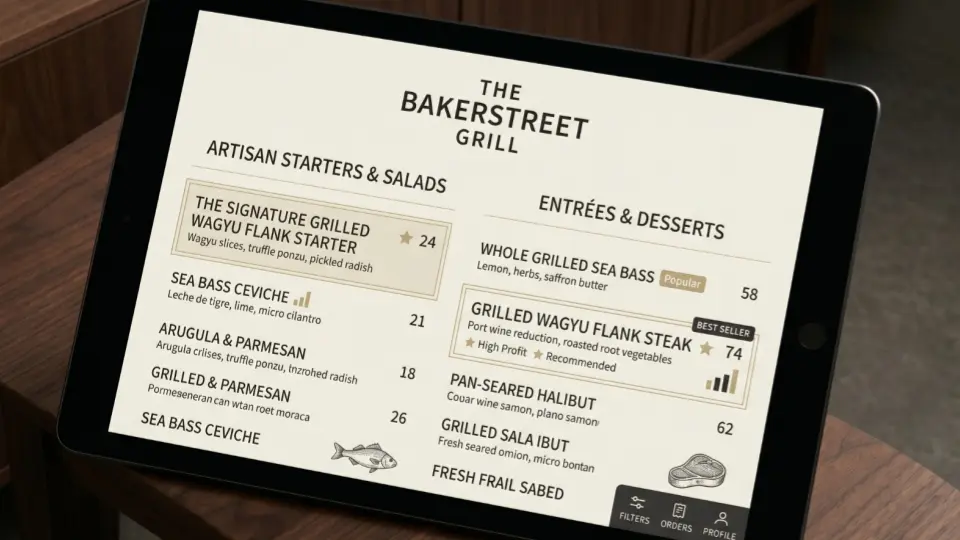
Menu engineering strategies help businesses evaluate the relationship between popularity and profitability. This approach often categorizes menu items based on their contribution margin and demand.
Dishes that are both popular and profitable are typically prioritized in marketing and menu placement. Lower-margin items may be adjusted, reformulated, or removed if they negatively affect profitability.
Food operators seeking to implement these strategies can benefit from professional kitchen environments designed for scalable production.
Practical Considerations in Commercial Food Production
Even the best commercial menu design depends on operational reality. Kitchen infrastructure, ingredient sourcing, and testing processes all influence how efficiently a menu performs. Aligning these elements helps maintain quality while scaling production.
Kitchen Capabilities & Scalability Planning
A menu should always align with the capabilities of the kitchen where it will be produced. Equipment availability, preparation stations, and staff workflows all influence how efficiently dishes can be prepared.
For growing food businesses, scalability is a key factor. As demand increases, the kitchen must support higher production volumes without compromising quality or speed.
Seasonal and Local Sourcing
Seasonal ingredients can improve both menu appeal and cost management. When ingredients are locally available and in season, they often have lower purchasing costs and better flavor quality.
Seasonal sourcing also allows chefs to refresh menus regularly while maintaining stable margins. Combining seasonal ingredients with a consistent core menu helps maintain both variety and operational efficiency.
Testing, Feedback & Iteration
Before launching a new menu, operators often run small-scale tests to evaluate preparation time, ingredient yield, and customer feedback. Testing allows businesses to refine recipes and ensure they can be produced efficiently in a commercial environment.
Iterative testing helps identify operational challenges early and prevents costly mistakes after a menu launch.
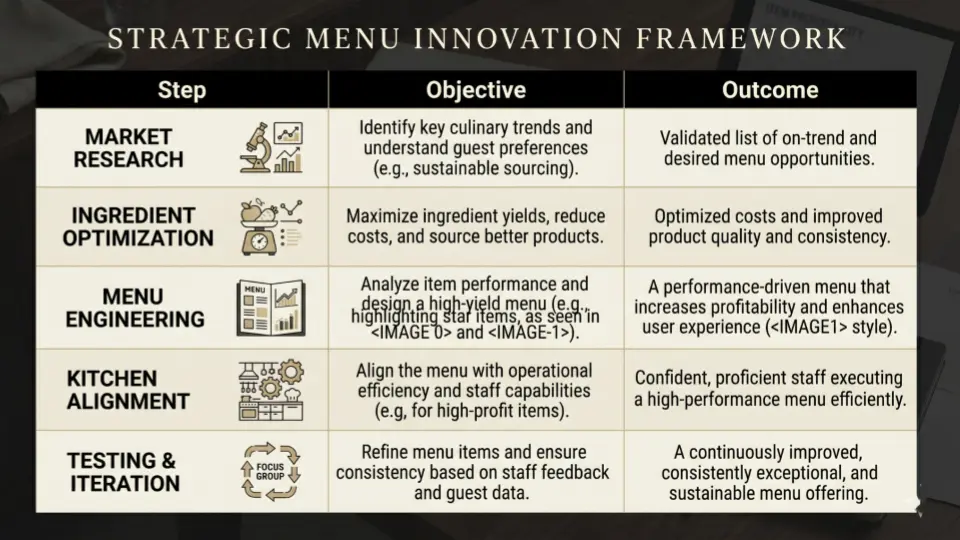
Quick Reference: 5 Key Steps to Design a High-Yield Commercial Menu
Designing a profitable menu requires balancing demand, cost control, and operational efficiency. The quick reference below summarizes the main steps used in professional meal planning to create a high-yield menu for commercial food production.
Turn Your Menu into a High-Yield Machine with CloudKitchens
Effective professional meal planning combines strategic menu design with the right production environment.
When menus are structured around profitability, operational efficiency, and scalability, food businesses can increase margins while maintaining consistent quality.
Kitchen infrastructure plays a crucial role in this process. Production-ready kitchens help streamline workflows, reduce operational friction, and support growing order volumes.
Ready to scale your commercial menu? Rent a CloudKitchens facility and get access to private kitchens designed to support efficient, high-volume food production. Explore available locations and start planning your next stage of growth.
DISCLAIMER: This information is provided for general informational purposes only and the content does not constitute an endorsement. CloudKitchens does not warrant the accuracy or completeness of any information, text, images/graphics, links, or other content contained within the blog content. We recommend that you consult with financial, legal, and business professionals for advice specific to your situation.