Pivoting your restaurant concept can save a struggling business. Learn when to adapt your model or walk away with this data-driven guide.
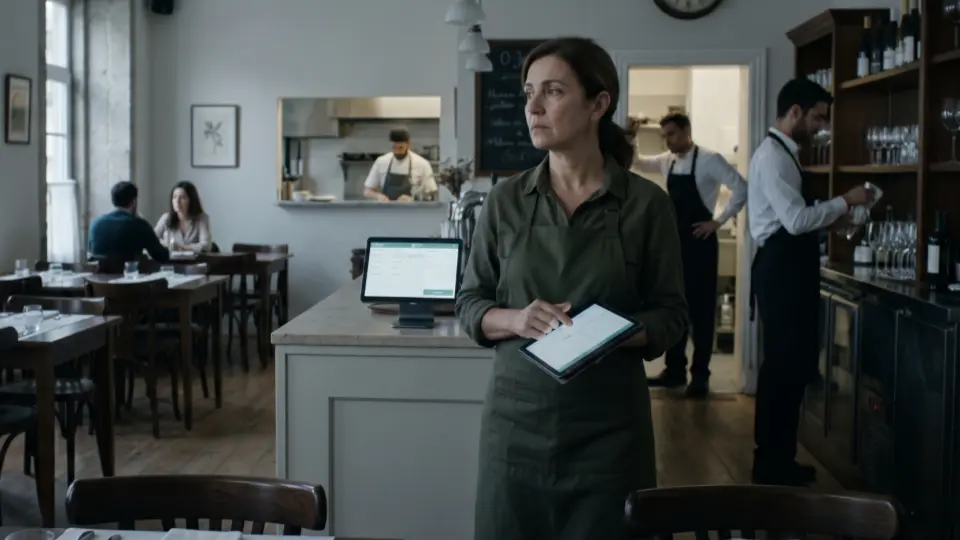
The dining room is quiet, save for the steady hum of the refrigerator in the background. You find yourself watching the clock, waiting for a notification that never comes, while your staff polishes the same glasses again, trying to stay busy.
This kind of silence carries weight, especially when you have invested time, energy, and vision into a concept that no longer seems to connect.
At this point, you are facing a difficult decision: should you keep pushing forward, pivot your restaurant concept, or accept that it may be time to close the doors? This situation is more common than most people admit, and the choice you make will shape what comes next.
This guide is designed to help you evaluate that decision with clarity, using logic and structure instead of emotion.
What Does It Really Mean to Pivot a Restaurant Concept?
A change in restaurant concept strategy goes far beyond updating your menu or introducing seasonal dishes. It reflects a deeper shift in how your business delivers value and how your customers experience your brand.
Understanding this level of change is essential if you want to execute a successful restaurant turnaround strategy.
This transformation typically affects multiple core areas of the business, including:
- Value Proposition: Redefines why customers choose your brand over others in the same market.
- Target Audience: Shifts toward a different demographic or adapts to new local demand.
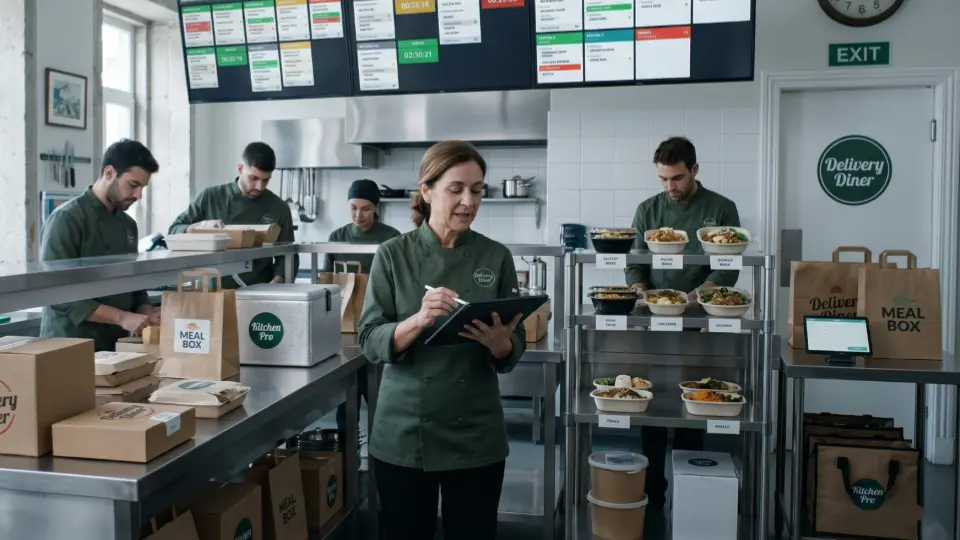
- Operational Model: Transitions from full-service dining to a delivery-first model or another format.
- Sales Channels: Expands beyond walk-in traffic into digital platforms and new revenue streams.
Beyond trends: what a true pivot actually changes
Pivoting involves rethinking how your business operates at its core, including your cost structure and brand positioning, so that it aligns with real market demand.
This kind of shift addresses the underlying reasons your original model struggled to generate consistent results.
For example, a fine-dining restaurant may transition into a more casual, delivery-focused brand that prioritizes volume and convenience.
That decision affects everything from menu design to kitchen utilization, requiring a coordinated transformation across the operation. Over time, you begin to see that a pivot works best when it realigns your resources with how customers actually choose to buy.
Common types of restaurant pivots
Many operators decide to pivot their restaurant business by moving away from dine-in service and toward a delivery-first model. This shift is aligned with market growth: theglobal ghost kitchen market was valued at over $70 billion in 2024 and is projected to exceed $145 billion by 2030, reflecting the rapid expansion of delivery-first operations.
Another common direction involves simplifying a complex menu into a more focused concept, which helps reduce operational inefficiency and improve consistency in execution.
In some situations, you may also explore launching multiple virtual brands from a single kitchen, allowing you to reach different customer segments without expanding your physical footprint.
Pivot vs adjustment: knowing the difference
It helps to clearly separate small adjustments from a full restaurant business model change, since each requires a different level of investment and commitment.
- Adjustments: Usually involve improving what already exists, such as updating suppliers, refining dishes, or refreshing the space to maintain relevance.
- Pivot: Changes the direction of your business in a meaningful way, often replacing your original strategy with a new one.
- Structural impact: When you shift your primary service model or redefine your target audience, the change affects every part of the operation.
- Planning required: This level of transformation demands deliberate planning and careful resource allocation.
The Real Signs Your Restaurant Needs a Pivot
Recognizing the need for change early gives you more options and helps preserve your ability to act strategically.
Consistent decline in revenue and traffic
Short-term fluctuations are expected in the restaurant industry, but when revenue declines consistently over several months, it signals a deeper issue.
You can track this by monitoring average ticket size and repeat customer frequency, both of which indicate how well your concept is resonating.
When your revenue no longer covers fixed costs over consecutive periods, your current model may no longer be sustainable.
High costs with shrinking margins
Rising food, labor, and operational costs continue to compress margins, making it harder to convert revenue into actual profit. As a result, even a full dining room may not guarantee healthy margins when pricing no longer keeps pace with expenses.
In many cases, the issue lies in a misaligned cost structure, especially when key expenses start to outweigh performance:
- Rent and occupancy costs that exceed what current volume can sustain;
- Labor expenses that grow faster than revenue;
- Food costs that fluctuate and erode margins over time.
In this context, the physical footprint itself can become a liability. Moving toward a more efficient setup, such as a ghost kitchen model, can help realign costs and restore long-term viability.
Customer behavior has changed — but you haven’t
Customer expectations have evolved toward convenience, speed, and digital access. In fact, according to The Guardian, up to 75% of sales in fast-casual restaurants are now consumed off-premises, highlighting how strongly demand has shifted toward delivery and takeout.
If your model still relies heavily on walk-in traffic while nearby competitors succeed with delivery and online ordering, you may be experiencing a gap between your offer and current behavior.
Your concept no longer fits the location or market
Over time, neighborhoods shift, and the audience you originally served may no longer represent the majority of local demand.
Changes in demographics, income levels, or surrounding businesses can gradually reduce the relevance of your concept.
When your pricing, menu, or positioning no longer match the expectations of the area, your location becomes a limiting factor rather than an advantage.
At that point, adapting your concept or reconsidering your footprint becomes a strategic necessity.
When a Pivot Makes Strategic Sense
Pivoting your restaurant concept becomes a strong option when you still have valuable assets to build on and a clear opportunity to reposition your business.
Instead of reacting impulsively, you can approach the decision as a structured move toward a more sustainable model.
You still have demand — but misaligned positioning
In some cases, your product resonates with customers, but the way you present or deliver it limits its potential.
You might already have strong-performing items that attract attention, yet your overall experience or positioning prevents consistent growth.
Refining your restaurant repositioning strategy allows you to highlight what already works while adjusting the format to better match customer expectations. This often leads to improved customer retention and more efficient operations.
Your brand has equity worth saving
If your brand still holds recognition and a positive perception in the market, you have an advantage that can support a transition.
Maintaining that connection allows you to evolve your concept while keeping your existing audience engaged.
By repositioning your brand thoughtfully, you preserve your visibility and reduce the effort required to attract new customers, which can be especially valuable during periods of change.
Operational structure can adapt quickly
Flexibility within your kitchen, team, and systems plays a major role in determining whether a pivot is viable.
When your infrastructure supports multiple formats or can be adjusted without major reinvestment, you gain the ability to explore new directions more efficiently.
Private kitchens, for example, allow you to test different concepts in new areas while reducing the probability of high fixed costs tied to traditional leases, which supports a more agile restaurant business model change.
You can test before fully committing
Testing new ideas before scaling them gives you data that supports more confident decisions. You can experiment with menus, formats, or channels through limited launches or virtual brands, observing how customers respond in real time.
This approach reduces risk and allows you to refine your concept gradually, building toward a stronger and more validated pivot over time.
When It’s Time to Let the Concept Go
There are situations where continuing to invest in the same concept no longer makes sense, and recognizing that moment can protect both your financial position and your long-term growth potential.
No product-market fit after multiple iterations
If you have already tested different menus, pricing strategies, and marketing approaches without meaningful traction, the issue may be more fundamental. Some concepts struggle to find consistent demand regardless of execution.
Understanding when iteration stops producing results helps you avoid investing additional time and resources into a direction that no longer shows potential.
Financial recovery is no longer realistic
At a certain point, debt and ongoing losses can outweigh the benefits of attempting a recovery.
When your projections show that profitability would require extended periods of near-perfect performance, the level of risk becomes difficult to justify.
Emotional attachment is driving decisions
Emotional investment often makes it harder to evaluate your situation objectively, especially when you have dedicated significant effort to building your business. This can lead to decisions based on past investment rather than future potential.
Creating distance between your identity and the concept itself allows you to make clearer, more strategic choices about what comes next.
Market conditions have permanently shifted
External changes such as increased competition, reduced foot traffic, or long-term shifts in consumer behavior can alter the viability of your concept. When these changes are structural, adapting within the same model may not produce meaningful results.
In these cases, stepping away from the concept can preserve your resources and open the door to more viable opportunities.
A Simple Framework to Decide: Pivot or Close?
Using a structured framework helps you evaluate your situation with consistency, focusing on the key elements that determine whether pivoting your restaurant concept is realistic.
Product — does your offer still make sense?
You can assess whether your menu aligns with current demand by analyzing performance data and identifying items that consistently perform well. These elements can serve as the foundation for a refined concept.
People — is there still demand for it?
Understanding your audience requires observing behavior patterns, including ordering preferences and spending habits, which reveal whether your concept still fits the market.
Place — does your location support it?
Both physical and digital presence matter, especially as delivery becomes a more relevant channel. Your location may still hold value when repositioned for a different format.
Profit — can it realistically sustain itself?
Financial clarity is essential, and evaluating your burn rate and path to profitability helps determine whether a pivot can realistically support long-term growth.
How to Pivot Without Starting From Scratch
You can approach a restaurant turnaround strategy by building on what already exists, which helps reduce costs and accelerate execution.
- Start with a minimum viable concept: Developing a simplified version of your new concept allows you to test quickly while maintaining control over costs. This approach focuses on delivering core value without unnecessary complexity.
- Test new menus or formats in small batches: Running controlled experiments gives you the flexibility to refine your concept based on real feedback, which helps improve efficiency and execution before scaling.
- Use delivery-first strategies to validate demand: Delivery channels provide a practical environment for testing new ideas, allowing you to gather data without making immediate changes to your physical space.
- Leverage existing infrastructure instead of rebuilding: Maximizing your current kitchen utilization helps you transition efficiently, preserving capital and allowing you to focus on growth rather than reinvestment.
The Hidden Risk of Not Deciding
Delaying your decision can gradually erode your business, often in ways that are less visible in the short term but more damaging over time.
- Slow decline is more dangerous than failure: Gradual decline can create a false sense of stability, while underlying issues continue to accumulate and limit your options.
- Opportunity cost: what you’re not building: Time spent sustaining a struggling concept often comes at the expense of exploring more viable opportunities.
- Team burnout and brand erosion: Internal challenges, including low morale and turnover, can affect both execution and customer experience, reinforcing a cycle of decline.
The Hard Truth: Not Every Idea Is Meant to Survive — But Every Owner Can Evolve
Making the decision to pivot or close your business represents one of the most challenging moments in your journey, yet approaching it with clarity allows you to move forward with purpose and direction.
When you remove the emotional weight from the equation, you begin to see that each choice contributes to your long-term growth as an operator.
Ready to test a new concept without the high overhead of a traditional build? Exploring private kitchens can reduce financial risk while allowing you to validate your next idea in real time.
Discover available locations from CloudKitchens and find the right space to launch and scale with flexibility.
DISCLAIMER: This information is provided for general informational purposes only and the content does not constitute an endorsement. CloudKitchens does not warrant the accuracy or completeness of any information, text, images/graphics, links, or other content contained within the blog content. We recommend that you consult with financial, legal, and business professionals for advice specific to your situation.