Why the most profitable delivery operators are trading expensive traditional leases for smart kitchens powered by predictive demand.
Demand forecasting has moved from a competitive advantage to a baseline requirement for modern food production. In high-cost markets like Austin, Denver, and Dallas, small mistakes in inventory or labor planning quickly erode margins.
Top-performing operators are replacing intuition-based decisions with data-driven systems that align production, staffing, and space usage with real demand.
Predictive analytics ensures that kitchen capacity is fully monetized while waste and idle labor are kept under control. Now, the ability to anticipate demand is one of the clearest indicators of long-term viability.
Why smart operators are searching for "kitchens for lease" with built-in intelligence
A kitchen today functions as a production hub powered by data, not just physical space. When evaluating locations, operators increasingly prioritize infrastructure that supports forecasting, workflow optimization, and delivery efficiency.
The shift away from raw square footage reflects a broader change in how profitability is measured. Output per hour and per square foot now matter more than size alone.
The hidden costs of traditional commercial rents
Conventional leases often lock operators into spaces that were never designed for delivery-first operations. Poor back-of-house flow, fragmented utilities, and limited data visibility create inefficiencies that compound over time.
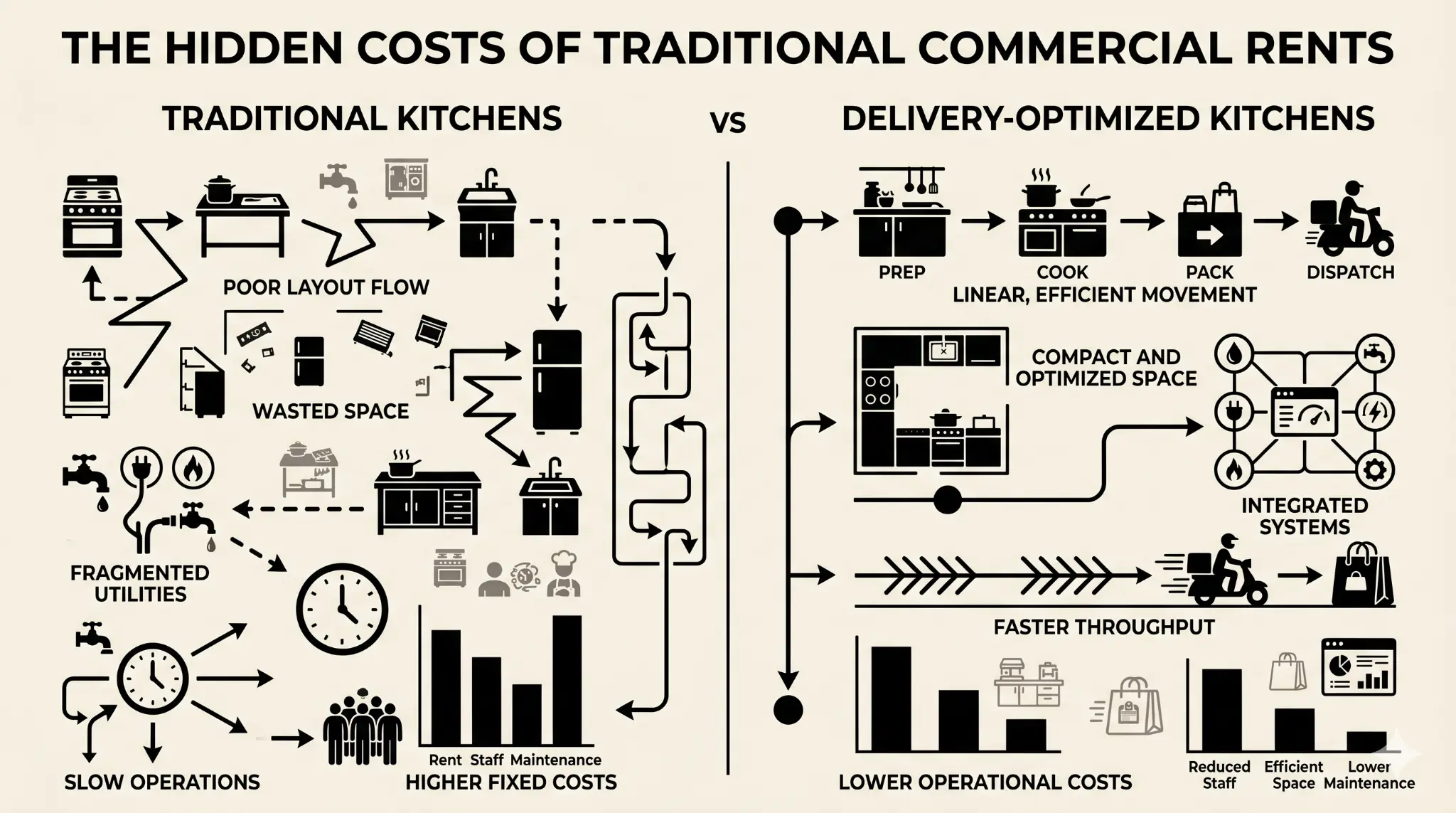
CloudKitchens’ tech-enabled food production units are designed around movement, throughput, and operational clarity. By optimizing flow instead of footprint, operators reduce space requirements, lower fixed costs, and reach profitability faster.
Location intelligence: why we picked Austin, Denver, and Dallas
Each CloudKitchens location is selected based on live consumer demand, order density, traffic behavior, and demographic data. This approach removes much of the risk traditionally associated with site selection.
Entering Austin, Denver, or Dallas through a data-validated location means launching in a market with proven delivery demand. The result is faster ramp-up and fewer surprises during early operations.
Scalability: renting for today, forecasting for tomorrow
Plug-and-play infrastructure allows operators to enter new markets quickly without rebuilding systems from scratch. Brands can test performance, refine menus, and validate demand before committing to expansion.
As volume grows, forecasting tools signal when additional capacity or new locations are justified. Growth decisions are tied to performance data, not guesswork, enabling sustainable expansion across regions.
Inventory optimization: turning "for rent" spaces into profit centers
Effective restaurant inventory management in 2026 is about matching inventory to real demand patterns. When supply aligns with local ordering behavior, kitchens reduce waste, avoid stockouts, and improve cash flow.
In Austin, large events and university calendars drive short-term demand spikes, which favors high-volume prep with fast inventory turnover.
In Denver, winter weather increases delivery frequency, making bulk staples and resilient storage essential to maintain consistency.
In Dallas, predictable corporate lunches and family dinner orders support mid-week replenishment and larger-format prep.
Across markets, inventory performs best when it reflects local demand drivers rather than generic forecasts. This approach turns idle kitchen capacity into a reliable profit center instead of a fixed cost.
Data-driven procurement in our Denver facilities
Denver’s climate creates sudden demand surges that can strain unprepared kitchens. Forecasting tools account for weather patterns and historical order volume, allowing operators to prepare ahead of disruptions.
Ghost kitchen operators in Denver maintain lean inventories while ensuring coverage during peak periods, protecting margins without tying up excess capital.
Automated stock rotation to protect your margins
Automated tracking enforces first-in, first-out inventory rotation, reducing spoilage and hidden losses. When inventory levels align with forecasted demand, kitchens gain leverage in supplier negotiations and purchasing timing.
Storage shifts from a passive cost center to an active efficiency driver within the operation.
Eliminating overstock in high-volume Austin units
Austin’s market is heavily influenced by seasonal events like SXSW and the academic calendar of local universities.
Our demand forecasting models account for these cycles, preventing the costly mistake of overstocking during quieter periods. That level of granularity allows Austin operators to stay agile and profitable throughout the year.
Operators using commercial kitchens for rent in Austin can adjust their procurement schedules to match these specific local peaks.
This ensures that capital isn't tied up in excess inventory that might expire before it can be sold. It also frees up physical space in the kitchen, allowing for a more organized and efficient working environment.
Labor optimization: maximizing every square foot of your lease
Labor remains one of the most significant expenses for any restaurant, making efficiency in staffing a top priority for 2026.
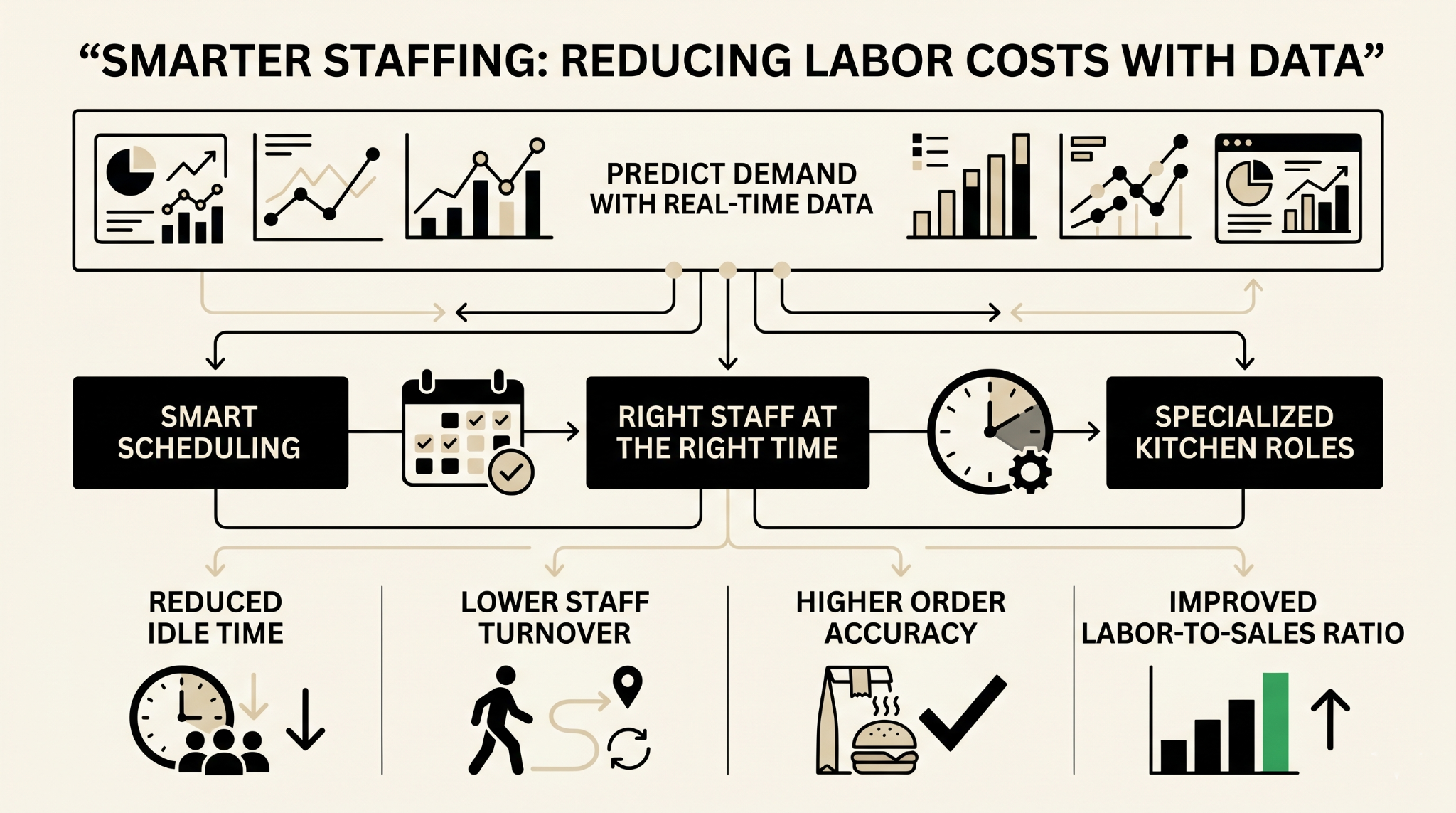
By using data to predict busy periods, you can ensure you have the right number of people on the line without overspending on payroll.
- Reduction in idle time during off-peak hours through smarter scheduling.
- Lower turnover due to predictable and fair work hours for your kitchen team.
- Higher order accuracy through specialized roles supported by our fulfillment team.
- Improved labor-to-sales ratios by aligning staff levels with real-time demand.
Staffing efficiency in CloudKitchens’ ecosystem
Our ecosystem includes an on-site fulfillment team that handles the complex logistics of order hand-offs and driver management.
This allows our tenants to focus exclusively on cooking, significantly reducing the need for front-of-house staff. It simplifies your management duties and reduces the complexity of your daily operations.
By outsourcing the logistics layer to our specialized team, you can maintain a leaner and more specialized kitchen crew. This shift lowers your overall payroll while increasing the speed and accuracy of your delivery operations.
Your team can focus on what they do best: creating high-quality food for your customers.
Predicting peaks to lower labor-to-sales ratios
Predictive analytics replaces guesswork with scheduling precision. Staff levels rise when demand rises and scale back during slower periods.
The result is steadier workloads, lower burnout, and improved profitability without sacrificing service quality
Hiring trends for commercial kitchens in 2026
According to the U.S. Bureau of Labor Statistics employment projections, jobs in food services and drinking places are expected to continue growing through the mid-2030s as consumer demand for prepared meals and delivery remains strong.
At the same time, industry conversations and labor reports show that restaurant operators increasingly seek staff with technical skills to work with digital order and inventory systems.
Investing in a tech-enabled environment makes your kitchen a more attractive place for top-tier talent to work.
Modern workers appreciate the organization and reduced stress that comes with a well-forecasted and managed kitchen. By providing the right tools, you can attract and retain the best staff in a competitive labor market.
Turnkey solutions in action: Austin, Denver, and Dallas
Each city presents unique opportunities and challenges that require a tailored approach to kitchen management and delivery logistics.
Whether you are scaling a national brand or launching a local concept, our turnkey solutions provide the foundation you need to succeed in these high-growth markets.
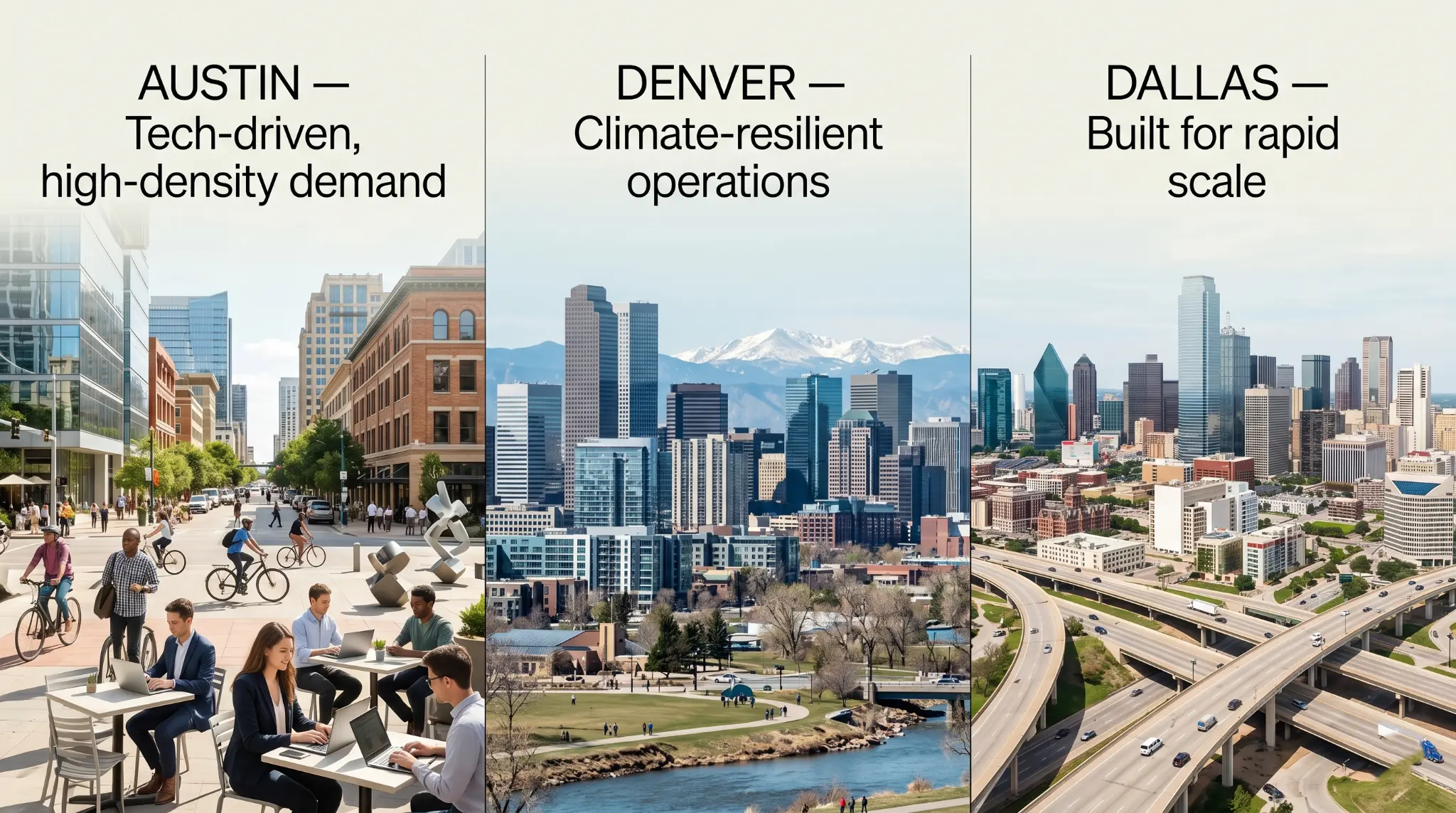
- Austin: Proximity to tech hubs and high-density student housing.
- Denver: Climate-resilient facilities designed for year-round delivery.
- Dallas: Strategic placement for rapid scaling across the North Texas metroplex.
Austin: Commercial kitchens for rent near high-demand zones
Finding commercial kitchens for rent in Austin that offer integrated technology is the key to capturing the city's tech-savvy demographic.
Our locations are placed near high-density residential areas to minimize delivery times and maximize freshness. This proximity is a major competitive advantage in a city that values speed and quality.
The integration of demand data allows Austin operators to pivot their menus quickly based on local trends and seasonal preferences. This agility is essential in a city known for its vibrant and ever-changing food scene. By staying ahead of the curve, you can ensure your brand remains relevant and highly sought after.
Denver: Climate-resilient operations for delivery brands
Denver brands must be prepared for rapid shifts in consumer behavior driven by the local climate and outdoor lifestyle.
Our facilities provide the infrastructure needed to keep operations running smoothly even when the weather keeps customers indoors. This resilience is built into every aspect of our Denver locations.
Utilizing a commercial kitchen in Denver allows you to share the burden of facility maintenance and climate control costs. This collaborative model ensures that your business remains resilient and profitable regardless of the season. It provides a safety net that traditional standalone restaurants simply cannot match.
Dallas: Scale your brand across North Texas fast
For those looking at ghost kitchens for lease in Dallas, the ability to scale across the vast North Texas metroplex is a major advantage.
Our network allows you to establish multiple touchpoints quickly to cover more ground and reach more customers. This is the fastest way to build brand recognition in a massive market.
Dallas is a high-volume market where efficiency is rewarded with rapid growth and strong customer loyalty. By using our data tools, you can identify the best neighborhoods for your next unit and expand with total confidence.
Our platform provides the roadmap for your brand's journey across the entire Dallas-Fort Worth area.
Stop searching for just a space and start leasing a strategy
Stop searching for just a space and start leasing a strategy that prioritizes your long-term profitability. Demand forecasting acts as the ultimate insurance policy for your lease, ensuring that your inventory and labor are always optimized for the current market.
In the fast-paced food economy of 2026, having the right data is just as important as having the right ingredients.
Don't just rent a kitchen; lease a competitive advantage that sets your brand apart from the rest. Explore our available kitchens for rent in Austin, Denver, and Dallas and transform your delivery business today. Our team is ready to help you find the perfect unit to launch or scale your concept with the power of predictive analytics behind you.
DISCLAIMER: This information is provided for general informational purposes only and the content does not constitute an endorsement. CloudKitchens does not warrant the accuracy or completeness of any information, text, images/graphics, links, or other content contained within the blog content. We recommend that you consult with financial, legal, and business professionals for advice specific to your situation.