Stop firefighting and start scaling: Transform your delivery operation into a high-performance engine using the tactics that revolutionized global industry.
Kitchen organization is the foundation of any successful delivery-first business, especially during the high-pressure dinner rush. When orders flood the screen and staff begins to scramble, the lack of a structured system leads to errors and delays.
Lean methodology, originally developed by Toyota, offers a transformative approach to virtual kitchen workflow optimization.
By focusing on value and eliminating waste, operators can turn a cramped space into a high-velocity production center that thrives on precision.
The 8 Wastes of Lean in a Ghost Kitchen Context
Identifying waste is the first step toward a more profitable operation, as every unnecessary action directly eats into your bottom line. In a high-velocity environment, these "hidden" costs often manifest as lost time and frustrated staff members.
1. Defects: Wrong orders that lead to refunds and poor app ratings
Defects occur when the final product does not meet the customer's expectations or the order specifications. This results in costly refunds, negative reviews, and a significant blow to your brand's digital reputation on delivery platforms.
To mitigate this, implement double-check stations and clear visual order summaries. Reducing errors at the source ensures that your kitchen organization remains focused on quality rather than fixing mistakes after they happen.
2. Overproduction: Prepping excessive mise en place that ends up as waste
Overproduction is often the most damaging form of waste because it hides other inefficiencies and leads directly to food spoilage. Preparing mise en place without real-time demand data ties up capital in inventory that may never be used.
By applying lean principles to delivery operations, prep levels stay aligned with actual order volume, increasing the likelihood that every ingredient prepared is sold during the same shift.
3. Waiting: Food sitting on the counter or cooks waiting for restocks
Waiting occurs when production flow is interrupted, creating bottlenecks that increase delivery lead time. This typically happens when the kitchen is ready, but packaging or the courier is delayed.
Aligning cooking times with the driver’s estimated arrival helps preserve food temperature, keeps operations moving, and ensures the customer receives a fresh, hot meal.
4. Non-Utilized Talent: Ignoring the feedback from your line staff
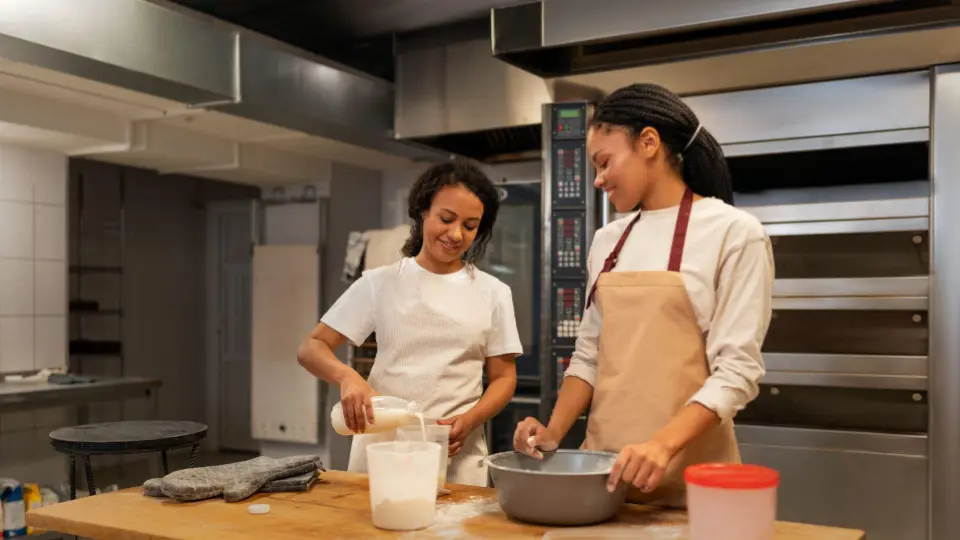
Your line cooks and prep staff are the ones who live the process daily and often see inefficiencies that management misses. Failing to leverage their insights prevents the kitchen from evolving and improving its internal processes.
Encourage a culture where staff members feel comfortable suggesting small changes to the layout or workflow. This engagement not only improves efficiency but also increases staff retention in a high-turnover industry.
5. Transportation: Unnecessary movement of ingredients between zones
Transportation waste involves moving items further than necessary, such as walking across the kitchen to reach a walk-in cooler. In a compact private kitchen, every extra step taken by a staff member adds up to minutes lost.
Analyze the path an ingredient takes from storage to the plate to identify redundant movements. Reorganizing the layout to keep high-use items close to the cooking station significantly reduces this type of waste.
6. Inventory: Capital tied up in excess stock within an agile space
Excess inventory takes up valuable real estate in a 200 sq. ft. space and increases the risk of ingredients expiring. It also makes kitchen organization more difficult, as staff must move items around to find what they need.
Maintain a lean stock level that supports your immediate needs while allowing for a small buffer. This approach frees up cash flow and ensures that your storage areas remain organized and easy to navigate.
7. Motion: Inefficient “kitchen dancing” where every extra step becomes lost profit
Motion waste refers to the physical movements of the staff, such as reaching, bending, or searching for tools. If a cook has to turn around constantly to find a lid, they are losing seconds on every single order.
Optimize the workstation so that all necessary tools and ingredients are within an "arm's reach" radius. This ergonomic approach minimizes physical fatigue and allows the team to maintain a faster pace during peak hours.
8, Extra-Processing: Menu steps that the customer doesn't value
Extra-processing happens when you spend time on tasks that do not add value to the final delivery experience. This could include overly complex garnishes that wilt during transit or redundant packaging layers.
Evaluate your menu to ensure every step in the preparation process is essential for quality and flavor. Simplifying these steps speeds up the workflow without compromising the customer's perception of the meal.

Implementing a 'Pull System' for Rapid Delivery
A "Pull System" ensures that production is triggered by actual customer demand rather than speculative forecasts. This shift in mindset is critical for maintaining a high-velocity flow in a delivery-focused environment.
Synchronizing Orders with Real-Time Tech
Integrated order management systems signal exactly when each order should enter production, preventing the kitchen from being overwhelmed by sudden ticket surges.
By using real-time data, teams can prioritize orders based on courier proximity and delivery windows, creating the synchronization required for high-level ghost kitchen operational efficiency.
Just-In-Time (JIT) Assembly: Synchronizing production with the courier
Just-In-Time assembly ensures each meal is completed exactly when the courier arrives, minimizing the time food sits under heat lamps and preserving texture and flavor.
To work effectively, JIT depends on tight coordination between order management and the kitchen line. When executed well, it directly improves Virtual Kitchen ROI by delivering consistent quality to every customer.
Standard Operating Procedures (SOPs): Maintaining quality and speed
SOPs are the backbone of consistency, especially when managing multiple brands in small kitchens. Clear, written instructions ensure that every staff member follows the same optimized path for every dish.
Regularly update these procedures as you find more efficient ways to execute the menu. Standardizing the "best way" to perform a task reduces training time and prevents the drift in quality that often occurs during busy shifts.
Visual Management and 5S: The Secret to a 200sqft Powerhouse
Visual management uses intuitive cues to communicate the status of the kitchen at a glance. In a fast-paced environment, these visual signals replace the need for constant verbal communication and reduce the cognitive load on the staff.
| The 5S Pillar | Action in a Ghost Kitchen | Operational Benefit |
| Sort | Remove unused equipment. | More physical space. |
| Set in Order | Label every bin and shelf. | Faster retrieval. |
| Shine | Daily deep cleaning. | Equipment longevity. |
| Standardize | Visual checklists. | Consistent results. |
| Sustain | Weekly audits. | Long-term discipline. |
The Kaizen Mindset: Utilizing 5-minute daily stand-ups
Kaizen is the philosophy of continuous, incremental improvement involving every member of the team. A quick daily meeting allows the staff to discuss the previous day's bottlenecks and propose immediate solutions.
Focusing on improving just 1% every day leads to massive gains in efficiency over several months. This proactive approach prevents small issues from snowballing into major operational failures during the Friday night rush.
Sort (Seiri) & Set in Order (Seiton): Eliminate what isn't used daily
In a private kitchen, space is your most valuable asset, so you must remove any tool or ingredient that isn't essential. Once sorted, every remaining item must have a designated "home" that is clearly marked.
Layout should be dictated by frequency of use, placing high-velocity items at eye level. This organization eliminates the "search time" that often slows down prep and assembly during peak hours.
Shine (Seiso): Cleaning as a form of inspection
Cleaning supports both kitchen hygiene and routine equipment inspection, helping teams identify wear and tear before it impacts operations. While cleaning, staff can identify a fraying cord or a low stock level before it causes a production halt.
A clean kitchen is also a safer kitchen, reducing the probability of accidents that cause delays. Integrating "Shine" into the daily routine ensures the facility remains in top condition for maximum productivity.
Standardize (Seiketsu): Create visual cues and color-coded bins.
Standardization ensures that the first three "S" pillars are maintained through visual cues like floor markings and labels. In a ghost kitchen, anyone should be able to step into a station and know exactly where everything is located.
Color-coding bins for different brands or dietary requirements helps prevent cross-contamination and errors. These simple visual signals make the kitchen organization intuitive and self-explanatory for the entire team.
Sustain (Shitsuke): Establishing the 'CloudKitchen Way'.
Sustaining the system is the most challenging part of Lean, as it requires the discipline to follow the rules even under pressure. It involves creating a culture where the team takes pride in maintaining the organized environment.
Regular audits and positive reinforcement help keep the standards high over the long term. When the system is sustained, the kitchen operates like a well-oiled machine, regardless of how many orders are in the queue.
Scaling Multiple Brands Without Multiplying Complexity
The ability to run several concepts from a single location is a major advantage of the ghost kitchen model. However, this requires a sophisticated approach to managing multiple brands in small kitchens to avoid operational chaos.
Shared Ingredients, Unique Identities: Inventory optimization.
Optimize your menu by using shared ingredients across different brands to reduce the total number of SKUs you need to manage. This simplifies kitchen organization and increases your purchasing power with suppliers.
While the ingredients are shared, the final presentation and flavor profiles remain unique to each brand. This strategy allows you to diversify your market reach without significantly increasing your operational footprint.
Cross-Training Your 'Line Athletes': Versatile staff.
Train your staff to be versatile "line athletes" who can switch between different brand menus without breaking their rhythm.
This flexibility allows you to reallocate labor to whichever brand is currently experiencing the highest demand.
Cross-training makes roles more engaging for staff while improving coverage during absences. A versatile team is essential for maintaining high ghost kitchen operational efficiency across a diverse portfolio.
Leveraging Data for Continuous Improvement: Analytics as your 'Gemba'.
In Lean methodology, the “Gemba” is where the work actually happens. In a digital kitchen, that role is played by performance data and analytics dashboards.
Reviewing these reports helps identify which brands and menu items drive the strongest results and where adjustments are needed in menus or labor allocation.
Data-driven decisions are essential for increasing delivery profit margins in 2026 and beyond.
Efficiency is the foundation of scalable delivery operations. By applying Lean principles, operators replace reactive problem-solving with predictable, profitable growth models built on consistency and control.
Ready to move from firefighting to performance-driven operations? Explore CloudKitchens locations and see how Lean principles translate into real efficiency gains across your delivery business.
DISCLAIMER: This information is provided for general informational purposes only and the content does not constitute an endorsement. CloudKitchens does not warrant the accuracy or completeness of any information, text, images/graphics, links, or other content contained within the blog content. We recommend that you consult with financial, legal, and business professionals for advice specific to your situation.